The board set the goal, often AI, but nobody in-house has shipped one and nobody owns the plan.
This results inThe date moves out quarter by quarter, and nobody can say what it will cost.
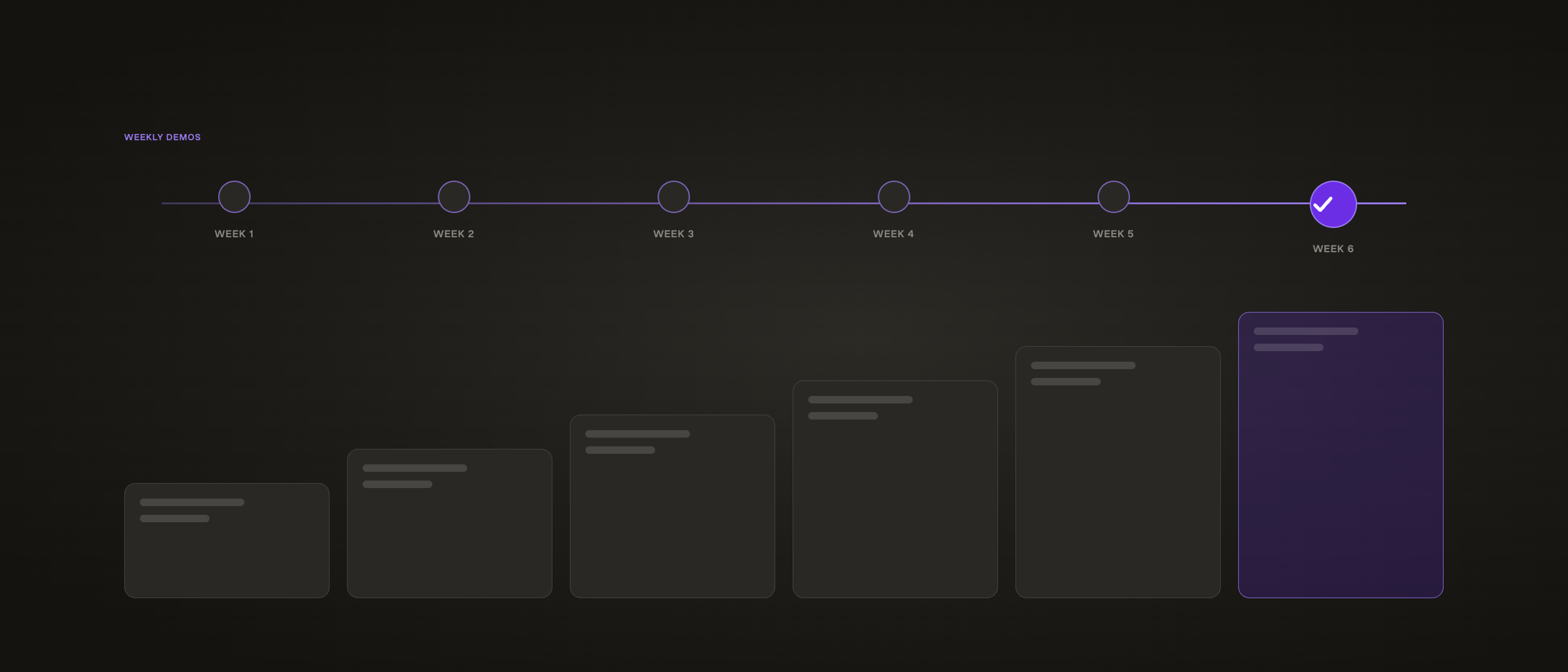
One working feature of your next version in production to regulated standards in 6 weeks, for a fixed €30,000: tests, documentation, security review and audit trail, what DORA expects of AI-generated code too. Weekly demos, code in your repo, no surprise invoices. Then decide on the team with nothing sunk.
The product is under control, and you don't run the engineering day to day to keep it that way. You know the date, you know what ships on it and why, you see the quality go up with every release instead of down, and you walk into the board meeting calm.
Measured in: the release on the date the board was given, fewer bugs per update, the next feature built on top of the last one instead of around it, and your week spent on the product, not on the team.
The board set the goal, often AI, but nobody in-house has shipped one and nobody owns the plan.
This results inThe date moves out quarter by quarter, and nobody can say what it will cost.
Code is generated, often by AI, without a plan, and the in-house team isn't moving.
This results inTech debt multiplies, every feature takes longer, and the rewrite becomes the real project.
Management pushes on deadlines, and competitors ship AI features faster.
This results inYou answer for a date you never had the means to hit.
Without CodeLions you have three paths.
What it does wellPeople under your control and, with AI tooling, faster and cheaper output.
Where it falls shortCapacity without ownership. The team is busy with the current version, contractors bring hours but no architecture, and AI-written code still needs someone senior to answer for it. The board's deadline doesn't move.
What it does wellA fast start and cheap code.
Where it falls shortA prototype, not a product. No architecture, no guardrails, no tests, so every update brings more bugs than the last and nothing can be planned. One Swiss buyer generated a second version in Claude this way and hit the wall in production.
What it does wellSomething to show leadership within weeks, or a platform instead of a build.
Where it falls shortSomething to show, nothing to run. An agency prototype doesn't pass a regulated review and nobody owns it after the demo; a platform still needs an integrator, an owner and years of lock-in. Either way the board sees a demo, not a release.
Management and your bank client see progress before the long contract, not after a quarter of status reports.
Architecture, epics and the release order, with an honest estimate of people and AI agents, so you know what the version takes and what each part costs.
You test the team on a real scope for a fixed price. If it works, you decide on the team with nothing sunk.
The in-house team isn't pulled away from support, and the AI initiative has an accountable owner, so when the board asks who owns this, there is an answer.
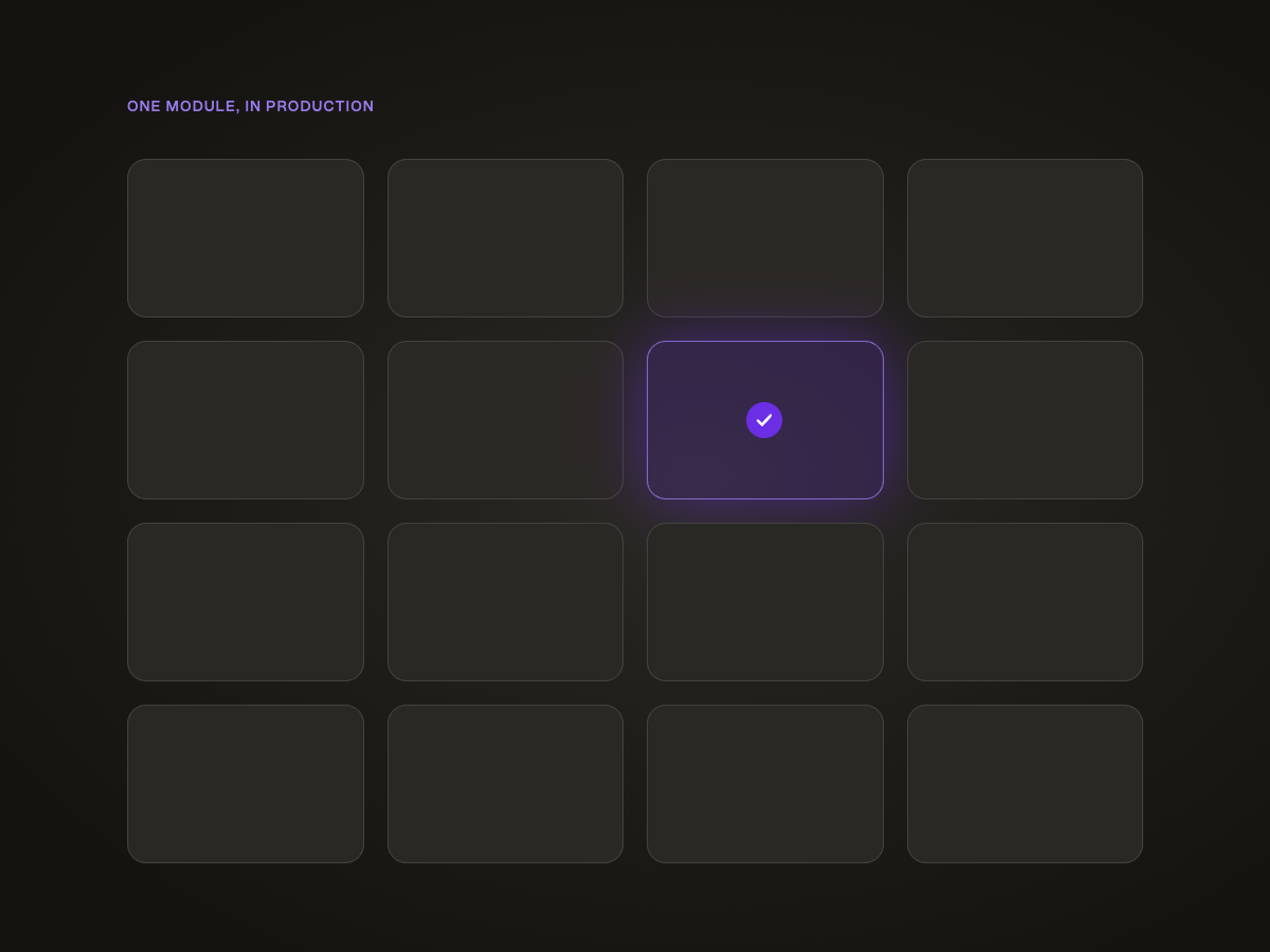
The first module of your next version, end to end: a key feature, an AI feature or an improvement of a key scenario, in production to regulated standards, with tests, documentation, security review and audit trail.
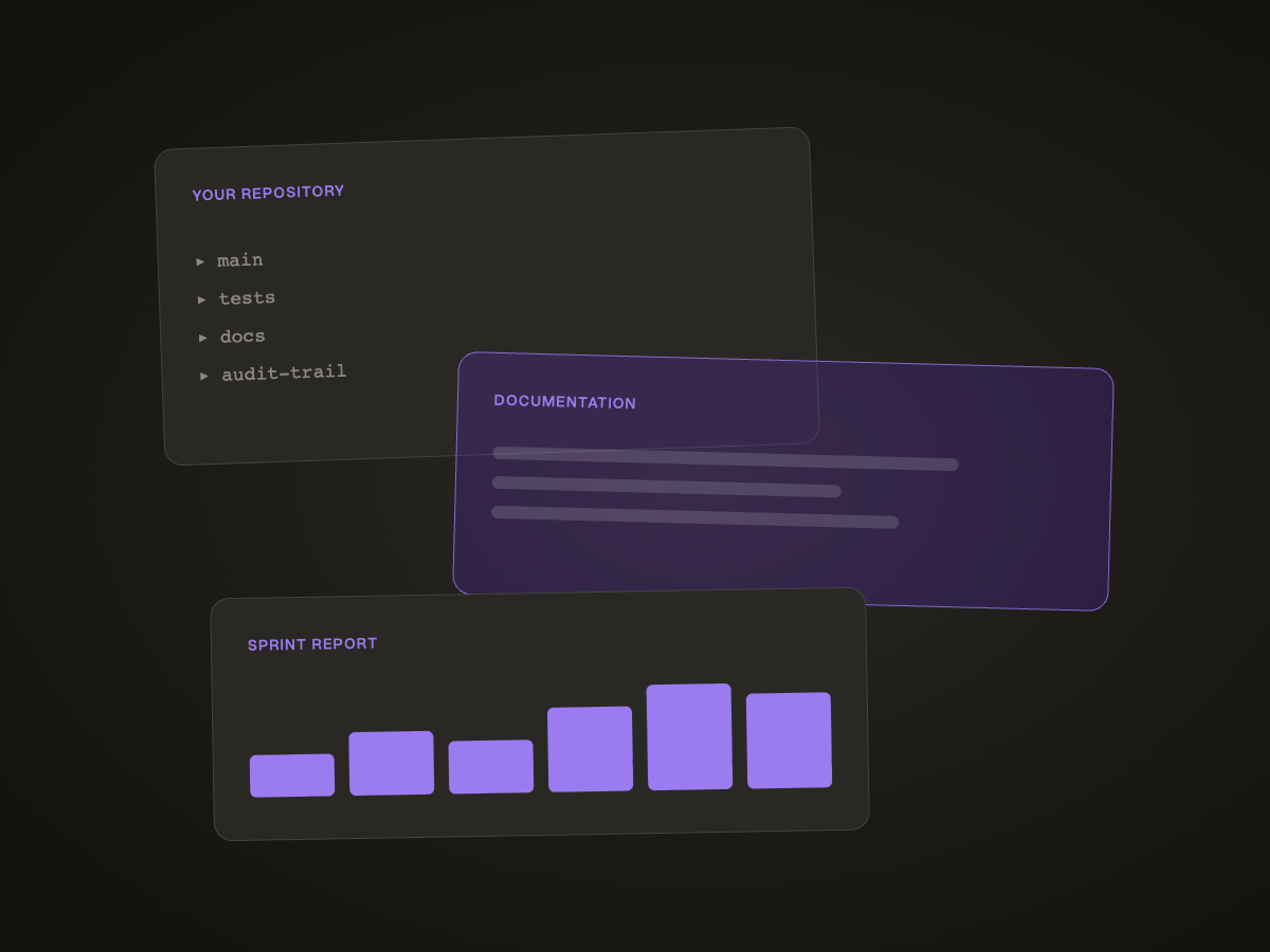
CI/CD and infrastructure as code, in your accounts from day one.
Technical documentation and an architecture diagram.
Recorded, so you see progress every week, not at the end.
What is done, what remains and the risks.
SLA, monitoring, and the security and compliance evidence a bank's due diligence asks for.
A proposal for a named team with CVs and pricing for 6 or 12 months.
In control of the product without managing the engineering day to day, and calm before the conversation with the board.
“It was good, now it's great.”
Architecture, epics and the release order before anyone writes code, with people and AI agents estimated separately, so you know what the new version takes and what each part costs.
The plan shows what to build first, what to leave out and what the trade-offs are, written for the board, not for engineers. If the goal doesn't need a build yet, the audit says so.
The Solution Architect who wrote the plan runs the named team that delivers it and answers for timeline, budget and scope. Product decisions stay with you; your CTO works alongside us, not instead of us. If the Proof Sprint misses the date, the overrun is on us.
Product Owners, product managers and non-technical founders at fintech and financial-services companies
Fixed €30,000. If we miss the date, the overrun is on us, not on your budget.
Your board has approved the AI version, and nobody in-house has shipped one. We bring the architecture, the plan and the people to build it while your team runs the current product, and the product decisions stay yours.
Book a callYou may already have, and it got you a prototype. Code is cheap now; what's expensive is the architecture, the release order and knowing what not to build. We don't replace Claude: we put the architecture and the guardrails around it, so the next version ships and the regulator accepts it.
Every change is reviewed and tested by a named senior engineer, and the security review and audit trail ship with the module. The review is the product.
You don't need to. You stay the owner of the product; CodeLions brings the technical vision and delivers it.